I set an alarm for 6:30, make a cup of tea, and read a chapter and lesson of A Course in Miracles. Then I put on my swimmers and fleece—sometimes a waterproof too if it’s cold or wet—and head down to the pier. The chickens are usually still in, but I hear them stirring, muttering to each other. Occasionally, the cockerel proclaims the day.
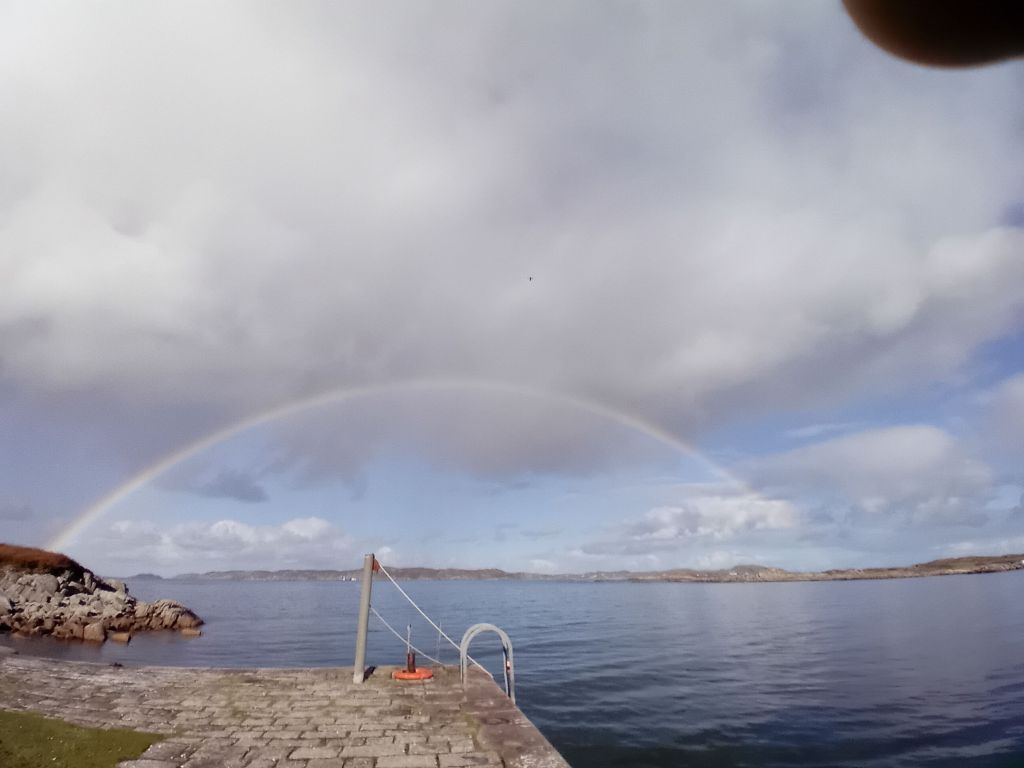
Without delay I slip off my Crocs, unzip my tops, and tie them around the rusty rail so the wind doesn’t take them. I do the same with my towel before walking with purpose and poise down the grated metal steps that end in the water. I walk until the weight of the water unbalances me and I have to give way, feeling the shock of briny cold on my upper body most of all.
If it’s calm, I breaststroke to the buoy and front crawl back—just 100 meters or so. If it’s choppy, I stay within 10 meters of the steps and simply enjoy the elements that bring about the swells and the fast-moving cumulonimbus clouds. Last week I swam out when the wind was whipping the water into small white peaks. As I turned around the buoy, the waves lashed my face and threw me completely. I suddenly felt short of breath, and the way back looked long. Regulating my breath and switching to breaststroke, I made it back—relieved and a little shaken. Lesson learned.
Received wisdom says you can stay in the water for as many minutes as the degrees of the water. It’s around 12 degrees at the moment, but I wouldn’t fancy spending that long in without a wetsuit. Which reminds me—I found one in a cupboard somewhere on the island. Maybe I should give it a go!
I’ve turned to porridge for breakfast, rather than its summery cousin, deluxe muesli. I stir in a spoonful of peanut butter and another of jam, shoveling it in while pretending to do admin but really checking the football, mostly. By now it’s 8:30-ish and I’m beginning to feel like contributing to the community, so I might do 30 minutes of log-splitting or mowing before leading the morning meditation at 9.
Meditation is a short, 15-minute affair with a brief lead-in. After setting the mood and making sure everyone is comfortable, I encourage them to become present and breathe regularly and fully. I read a passage from a book by Eileen Caddy, founder of the Findhorn Institute. It’s a tradition carried over from the last iteration of the Erraid community, though it probably won’t last much longer. I like it, but most of the other residents don’t.
After meditation we share our plans for the day, and the guests choose what they’d like to help with. There’s always log-splitting. There’s always gardening. Sometimes cooking. Occasionally, John the crofter’s sheep need rounding up. We’ve had to be stricter about tea breaks, as they tended to drift into leisurely, biscuit-fueled conversations that spoiled our lunches—for those of us with the self-discipline of juvenile Labradors.
Lunch is usually soup and bread, followed by a bit of downtime. It’s important to take this seriously, as the physical nature of the work can lead to real fatigue if not respected. For most of us, it means a noticeable increase in calories burned. For me, there’s also the mental load of on-the-hoof problem solving: water system pressure variations, three-stage cesspit bio-regulation, and so on. What makes this harder is the frequent lack of instructions or any kind of central admin. After a while of scrabbling through lever-arch files, asking around, and phoning past residents who might remember where certain documents are, it sometimes feels like urinating into the gusting Atlantic westerlies.
In the afternoons, we change things up for variety. With seven people, we can split an impressive amount of logs—one on the machine, one receiving, one stacking, and one feeding unsplit rounds onto the machine. Whole garden beds can be weeded and dressed with compost, seaweed, or, more often these days, sown with cover crops like clover or rye grass. The guests love this. Many remark on how it reminds them they don’t have to struggle alone. Many hands make light work, yes—but they also make light, connected faces and hearts.
The afternoon meditation is optional, but I like to attend if I’m not cooking or caught up in drains. It helps me mark the rhythm of the day, and I enjoy meditating with others and chatting afterwards while waiting for the dinner bell.Naturally, dinner brings more conversation about the day’s events. Most of the food now comes straight from the garden. Each group of guests brings a different dynamic—some weeks invite deep dives into lives and experiences, other weeks we skim lightly across the surface. As an unspoken rule, we leave politics and current affairs aside; people come here for a break from the noise.

After dinner, fires are lit. People return to their houses to enjoy the company of their housemates, if they have any, or their own solitude. The nights are drawing in, and from the couch in Number 3 I watch dusk settle over the inlet and the Ross of Mull.
It’s not unusual for me to be in bed well before 10 with a book—currently Question Number 7 by Richard Flanagan (highly recommend!). If it’s windy, the chimney in my bedroom whistles a little, but an old duvet cover thumb tacked over the retired fireplace softens the sound a notch or two.
So, I’m extremely nervous about this but I did promise myself I’d do it. As a community member on Erraid I am here on a voluntary basis. There is a small stipend. I also promised myself this would not become a life, however wonderful and nourishing, that would drain me financially. Therefore, if you feel so moved, a small donation to travel costs and the occasional coffee or pint would be warmly received.
Make a one-time donation
Make a monthly donation
Make a yearly donation
Choose an amount
Or enter a custom amount
Your contribution is appreciated.
Your contribution is appreciated.
Your contribution is appreciated.
DonateDonate monthlyDonate yearly Erraid life
Leave a comment