Category: Uncategorized

  • A bit of Erraid history

    Erraid is made of some of the oldest rock on earth. For 420 million years it has hosted multiple ice ages, temperate forests and intermediate eons. Look around at the near islands and they all show their age; Staffa, Little Colonsay and the Treshnish isles all demonstrate the flattening out of time, tides and temperatures. ‘It won’t be long,’ you think, ‘until they are worn to a flat disk and then, plop, in they’ll go.’

    Pioneer fauna wants to get a grip, but any surface of more than a 30 degree incline is bare. The plants simply can’t hold on; the surface too smooth and lacking the semi-permeable pocks and crevices of limestone or chalk. Where the rock relents, in the bowl of the mid-isle, the peat is thick; bog water the colour of stewed tea. After hard rain, the sea turns from clear to brown until the tide takes it out again.

    In stark contrast Balfour bay is a fine, white sand beach and, a few miles around the east coast of Mull, there is the Black sand beach of Carsaig.

    Human habitation can be traced back as far as 2500bc and the Beaker people, travelling north from the Rhineland. Later, Celts from Ireland, Picts, Vikings and Saxons, until the Scottish clans of Campbell, MacLean and MacDonald settled in to a steady rhythm of internecine sacking and massacring; and agriculture when it was quiet.

    After countless shipwrecks off the Ross of Mull (24 in the year spanning 1865-66, at the cost of 21 lives), the Northern Lighthouse board proposed that a lighthouse be built on a rock 17 miles out to sea, due south of Erraid, called Dubh Artach. They engaged the company of David and Thomas Stevenson who had already built up an impressive portfolio of lighthouses in hard-to-reach places. Erraid was decided as the construction base and was therefore changed from an uninhabited outcrop to a major construction site. Thomas Stevenson brought his son along for a few extended visits. Later, Robert Louis was to use the landscape of Erraid in his books ‘The Merry Men’ and ‘Kidnapped’, Balfour Bay being named after David Balfour, the hero of the latter.

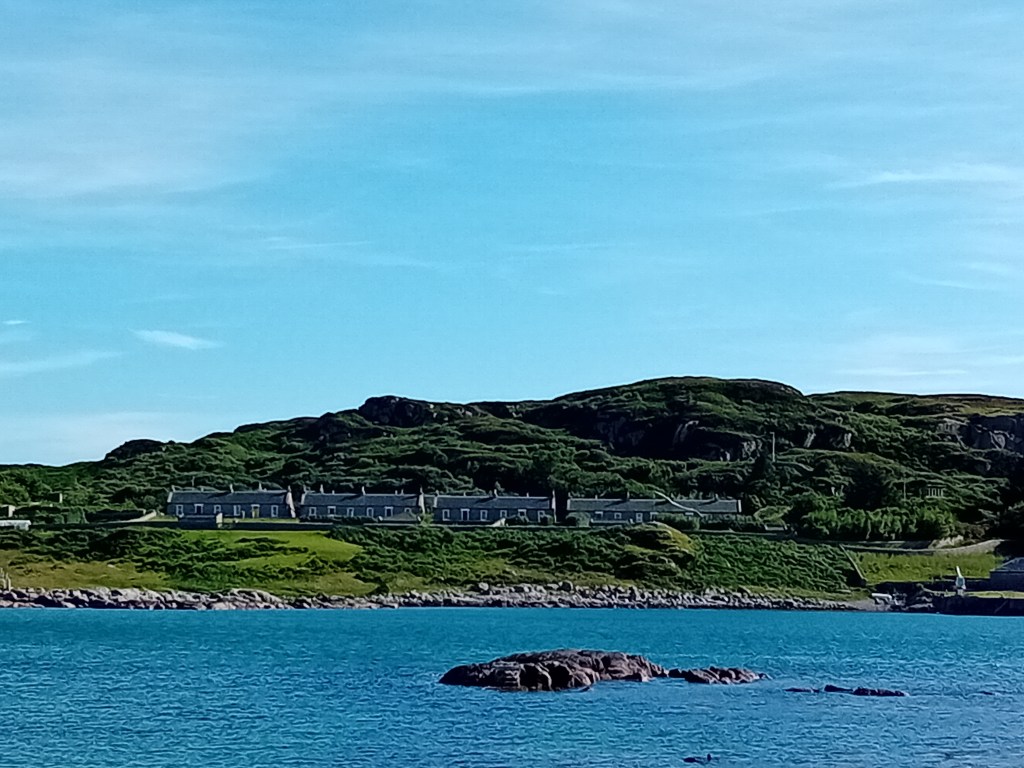
    A broad pier was constructed, along with a boat house and a street of cottages for the construction workers and their families. These would later turn into the lighthouse keepers cottages and, much later, the cottages lived in by us and visited by people from all over. 

    Stone was quarried from 50 meters south of the pier, cut and dressed to precise measurements and then dovetailed so all pieces interlocked. No mortar was used between any stone on the lighthouse. During construction the conditions were a constant problem, so that it was only possible to land on Dubh Artach occasionally. Prior to starting the build a cast iron domed structure was build on stilts and riveted to the rock on Dubh Artach. This was barracks for the workers. During one particularly bad storm 14 men were trapped for six days as torrents battered the outcrop and their metal shell, the sea breaching it on one occasion and washing away vital supplies of food. One can only imagine the desperate conditions during that prevailed.

    Victorian engineering such as this is barely fathomable. They dragged 2 ton granite blocks up a completely smooth rock far out to sea using hand winches, as the spray washed over, with nowhere to retreat to but an iron box! The lighthouse took 4 years to complete as, during that time, landing was only possible a total of 91 days. 3115 tones of rock were transferred and placed on those days. Just as the world was enthralled when Thor Hayerdahl and his crew set off over the pacific ocean in a raft to prove a point about early seafaring, so too I am disarmed by the sheer audacity of the idea, let alone the execution of it. Self-regard ignored in pursuit of a nobler aim.)

     It seems, remarkably, no one lost their lives during the construction. There were injuries reported, mostly body parts being hit or crushed by heavy stone. They all came back after a time to the cottages of the street, with their heavy doors and large, open fires of coal, to dry off, rest and sleep, in the knowledge that soon, when the sea granted permission, they would be out, at it again.

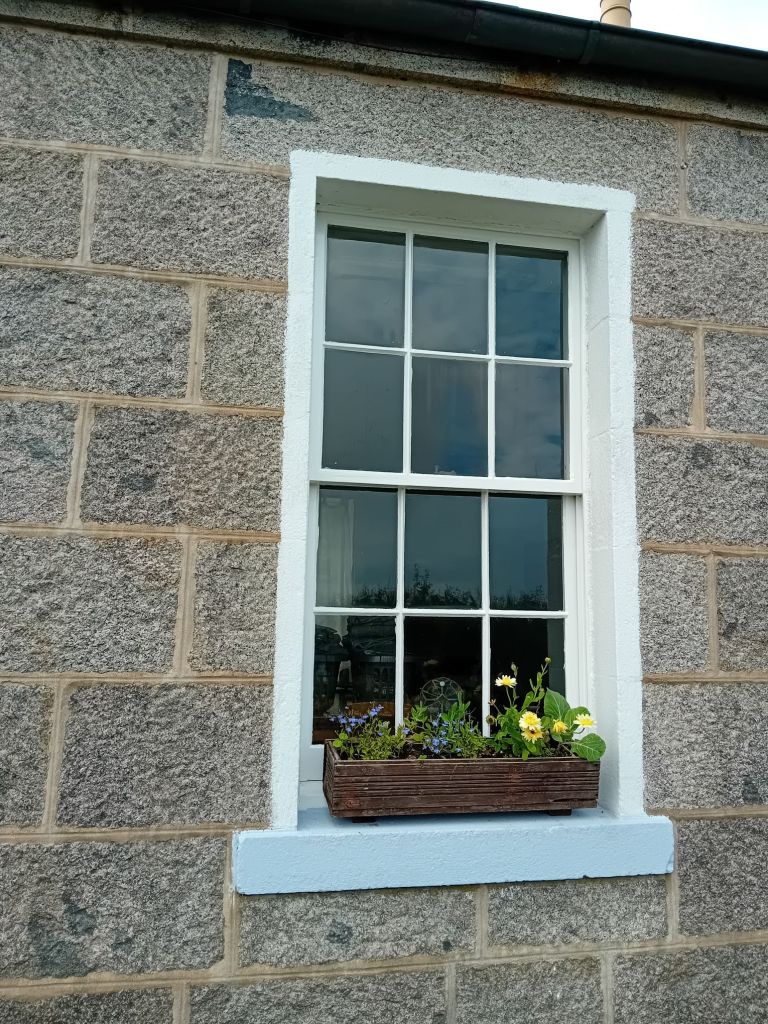
    The houses are semi detached, single story cottages, built of the same slivery grey/black as the lighthouse. There are heavy, hard wood doors with thick bolts to keep them shut. The windows are generous to the north and shrink towards the south, where the new kitchens and bathrooms are. The wide fireplaces that were once open still have huge clothes airers, hoisted on ropes, above them. Cottage number one used to be a school for the lighthouse builders and keepers children, and also for other local children that made their way across the narrows each day from the mainland. After lessons, the children would help in the gardens or any other domestic tasks. When they were done with that a fair few would be seen running around the perimeter walls that act as much-needed wind breaks for the crops.
  • Peri

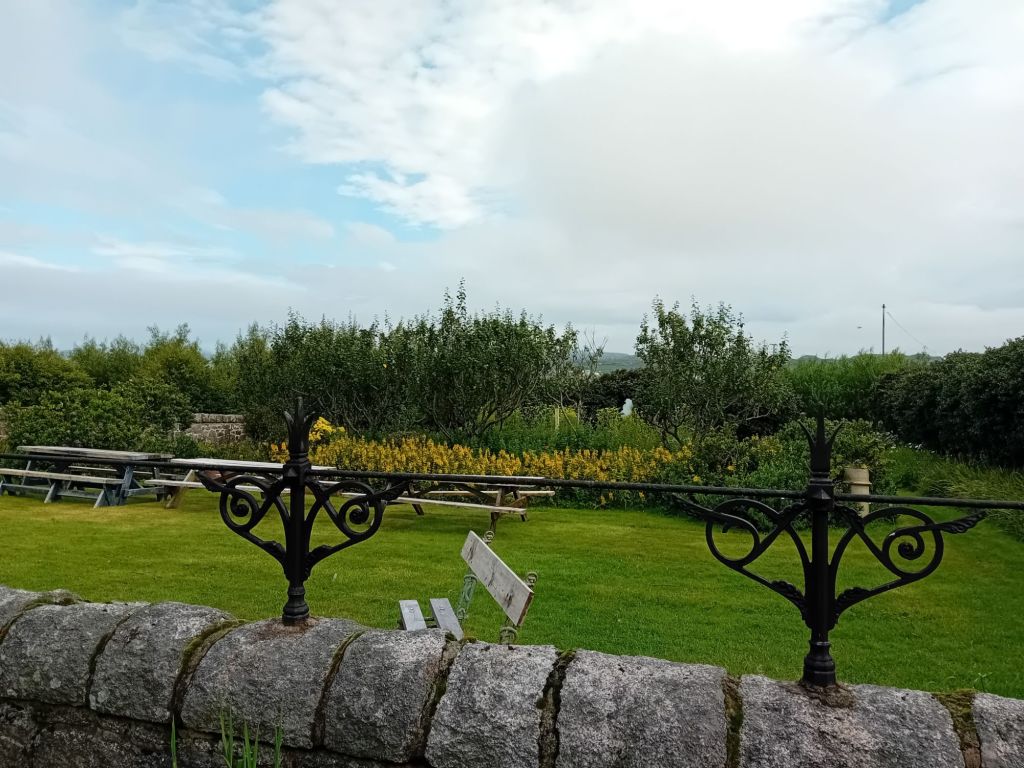
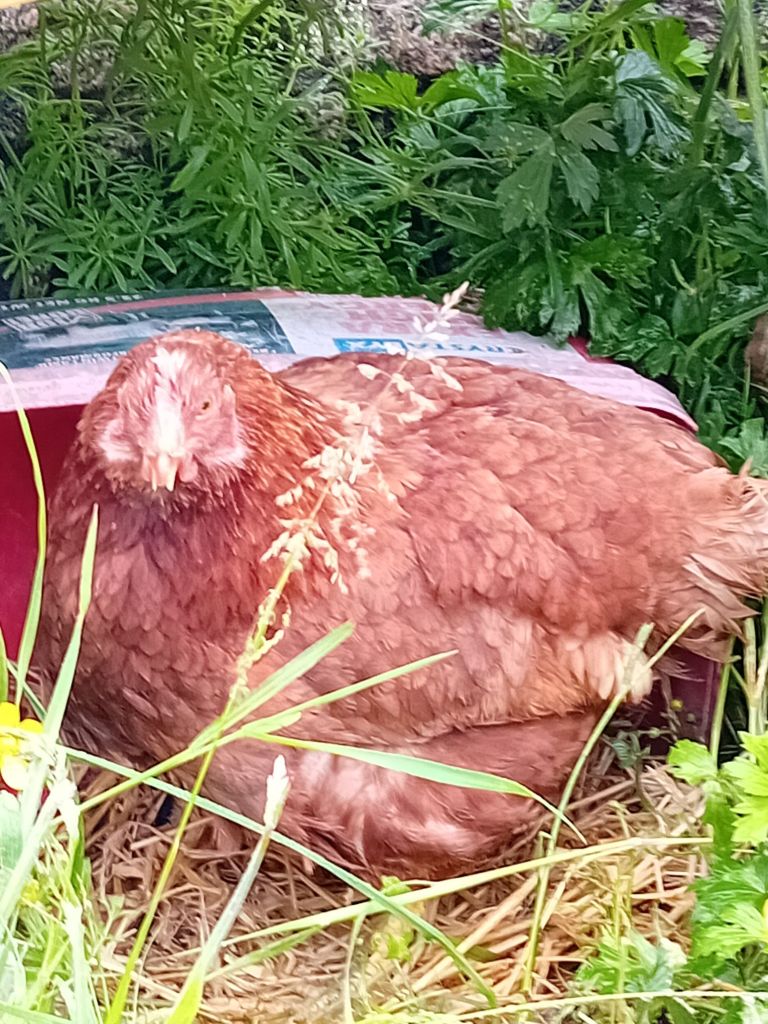
    Peri is living a charmed life. As a Rhode Island Red with mobility issues, there are many lives she could have lived that would have been shorter than the one she is currently enjoying. No one is quite sure what the exact problem is, but she has a bad limp that means she can no longer scratch and forage like the other chickens. The others had taken to pecking her, seeing she was weak, so during the day she is relocated from the coop halfway down the hill to the first garden with the benches, where we have coffee breaks and meals when the weather allows. During the night, she has her own small section of the coop where she cannot be victimized.

    She has split the island. When it was first discovered that she couldn’t walk properly, most assumed she would have a swift exit, but Magnus—being the most familiar with the chickens—chose to see if she would recover. The question of a visit to the vet was raised, or even a call-out, but these are remote parts—and we, the remotest part of those. Conjecture as to the opinion of a rural stock vet ran in only one direction. Quips about curry began to air, and casual bets about the longevity of Peri were taken.

    The thing is, she seems to be enjoying life. Often, when an animal senses its own demise, it will withdraw and stop eating. Contrary to this, Peri seems to thrive on the hum of activity whenever drinks are taken mid-morning. With what little mobility she has left, she shuffles into the main lawn from her day box, abandoning her station next to water and cornmeal.

    She has a voracious appetite. Particularly to her liking are pasta, oaten biscuits, and—as Alice found out when she was cuddling her and trying to eat dessert at the same time—spiced rhubarb cake.

    There’s no doubt that Peri is lucky to be on Erraid, with its humans who try to cherish life wherever it wants to thrive. I don’t mind saying that I was a detractor at first: with so many other priorities here, what use is it to pour out meagre resources of time and energy into a chicken that will neither lay nor provide tasty meat? But Peri has taught me things that apply equally to chickens and to the people I have chosen to live with on this beautiful, austere island: if you commoditize an individual, you negate much of their potential contribution to the world. Peri has become a focus for compassion, a tool for self-forgetfulness, and a wonderful demonstration of resilience. Sure, left to fend for herself in the wild, she would have been dinner for something a long time ago. There is no question that her life has been artificially prolonged by human intervention. But she has been seen, cared for, and loved for a while. And when she settles down in her coop or box for the final time, she will not reflect or count her blessings—she’ll simply not get up again. Whereas for us larger-brained mammals, who invest huge amounts of energy developing the capacity to empathize, love, and grieve, Peri will have pecked out a little piece of Erraid folklore all for herself.

  • Orientation

    The lighthouse keepers cottages from FIdden

    Take junction 13 north up the M5. Let it merge into the M6 and carry on north, past the tantalising
    Tebay services and other, more geographical marvels of England’s north. Travel through Glasgow—
    perhaps having stopped overnight in Carlisle—and continue to the beginning of the Highlands, bending
    left around Loch Lomond first. Squiggle through gently inclined valleys until Oban appears, quite
    suddenly. Rest a while as the CalMac ferry reduces its schedule to a paper exercise, then enjoy the often
    choppy sail to Craignure, Mull.
    Exit left and prepare for over an hour of single-track road with passing places, where blithe, wide
    camper vans dally and locals rally. No, they haven’t forgotten to turn off their indicators—they want to
    get by! Skirting Loch Scridain with its views of the sheer western peninsula, try not to crash. Turn left at
    Fionnphort, left again at Fidden, wiggle, wiggle, wiggle. Park at Knockvologan, put wellies on, carry
    what you can, and hike down—over the beach if it’s not submerged (in which case, take off your wellies
    and wade or go back to Fionnphort for the night if you start getting pulled out to sea). If you’ve made it
    over, you are now on Erraid. Follow the coast northwest, past Judy’s cottage, up the tractor track,
    through the gate below the old schoolhouse, and find someone to say hi to.
    After welcomes and refreshments, there is often talk about the journey—whether the newcomer found
    the island with ease or difficulty. Last week, however, a different conversation began in hushed tones,
    sparked by a daughter who had come with her mother:
    ‘We are in Findhorn, right?’\ ‘This is Erraid. Findhorn is three hours north of here.’\ ‘I didn’t
    think the Findhorn Foundation was on an island. What shall we do?’\ ‘You’re welcome to
    stay.’
    They ended up having a lovely week.

    It’s not as silly as it seems. Until very recently, the island of Erraid community was run by the Findhorn
    Foundation. Findhorn is famous in New Age circles for transforming a barren piece of land in the 1950s
    into a beautiful garden and retreat centre—with all the fabled giant cabbages you could eat. COVID had
    a major impact on operations, and the foundation has now shrunk to a fraction of its former size. As a
    result, it has rationalised its activities, passing the running of Erraid back to the island’s owners, the Van
    De Sluis family.
    An intentional community is one where a group comes together for a common aim. Here, it is to be as
    self-sustaining as possible and to be guardians of the historically important lighthouse keepers
    cottages. It’s difficult to be completely self-sustaining and, as one member recently pointed out, not
    even desirable—that would negate cooperation with the neighbours, a vital part of life in remote
    communities like the Ross of Mull. We also host paying guests who come to experience community life
    —usually for a week—or to retreat and take time for themselves: walking, reading, finishing a writing
    project, that sort of thing.
    There are six of us who have committed to a long-term stay here, usually between one and three years.
    Apart from Magnus, none of us have been here more than two months. Beyond the geographical
    remoteness from towns, shops, and services, building a workable, sociable, and fun group is the
    biggest task—the challenge we accept and work on every day. It quickly becomes clear that it requires
    more than simply making friends with five other people. We need to build systems that allow us to
    navigate any eventuality—from minor disagreements to deploying resources during a critical medical
    incident. We’ve all had some experience of communal living and decision-making. The selection process
    was rigorous, with probing interview questions, but we all arrive with our own habits, tics, tendencies,
    and foibles. Some of us tend towards overworking, some to introspection, others to extroversion. We need different amounts of personal space and time alone. Some get ill more often; some have
    diagnoses that require consideration. All of this needs ongoing attention and care.
    A lightness of touch is essential. In all the personal communication, the maintenance, cooking, ordering
    of supplies, caring for animals, and tending gardens, remembering that, as Alan Watts put it, “we are at
    play” is key to thriving here. The weather plays—battering rain into full sun in the time it takes to boil an
    egg. The sea plays—changing from clear blue to peat-brown after rainfall, varying its tides and currents
    so you never approach the far jetty quite the same way. The land plays—step off the street and the
    ground becomes ever-changing, from ageless granite to welly-eating bog to fine white beach sand.
    Yielding to all this is essential: a willingness to say “yes” to the games offered here. To learn the rules. To
    accept that sometimes you will be “out” and must contend with sea spray, cancelled ferries, a boot full
    of brackish sludge, or a waterproof jacket that worked perfectly well in the Cotswolds—but not here.
    To remember to be at play is to surrender. Not everything will get done today—not in the way you
    thought, anyway. The unexpected lurks around corners to test whether you’re still playing the game: an
    overflow pipe suddenly spewing water, an outboard motor that won’t start, the mobile cinema turning
    up in Bunessan. Can you welcome the novel and disruptive as the jokers in the pack.

  • Arrival and knitwear

    View from number 3

    In the community, Wednesday is an off-schedule day.

    It’s a chance for those staying a week to visit Iona and for residents to do more domestic things. For me, it means getting my stuff onto the island. There are some bags and boxes of things in Mum’s attic, and the ever-dependable Yaris drives up the rest of what I possess. It is parked at Knockvologan, a 20-minute hike off the island, over the beach, and up a few fields. There are neap tides, so the beach is walkable pretty much all the time. Wellies are still good as it’s damp peat getting off the beach.

    I drive round to Fidden, past the campsite and farm. The lambs have no sense of the green cross code, so I learn quickly to have a foot close to the brake pedal. Stopping opposite the street and next to the small concrete jetty, I wait. I have messaged Magnus,but there has been no reply.

    Remembering that some of the plastic from the front passenger side wheel arch is dragging on the ground, I decide to do some repairs, given the toolkit is handy. A small hole drilled, a cable tie inserted and everything seems much less hangy-offy. 

    Two figures make their way onto the quayside on Erraid and descend into the small wooden boat fitted with an outboard. The water is choppy as the wind is up. The boat makes a wide arc before finishing its 5-minute journey in the calm of the inlet. Anna-Martine drops the fenders and Magnus ties it steady. They were expecting I’d shopped for some essentials but I hadn’t as I thought they were not needed. I promise to buy what I can carry later.

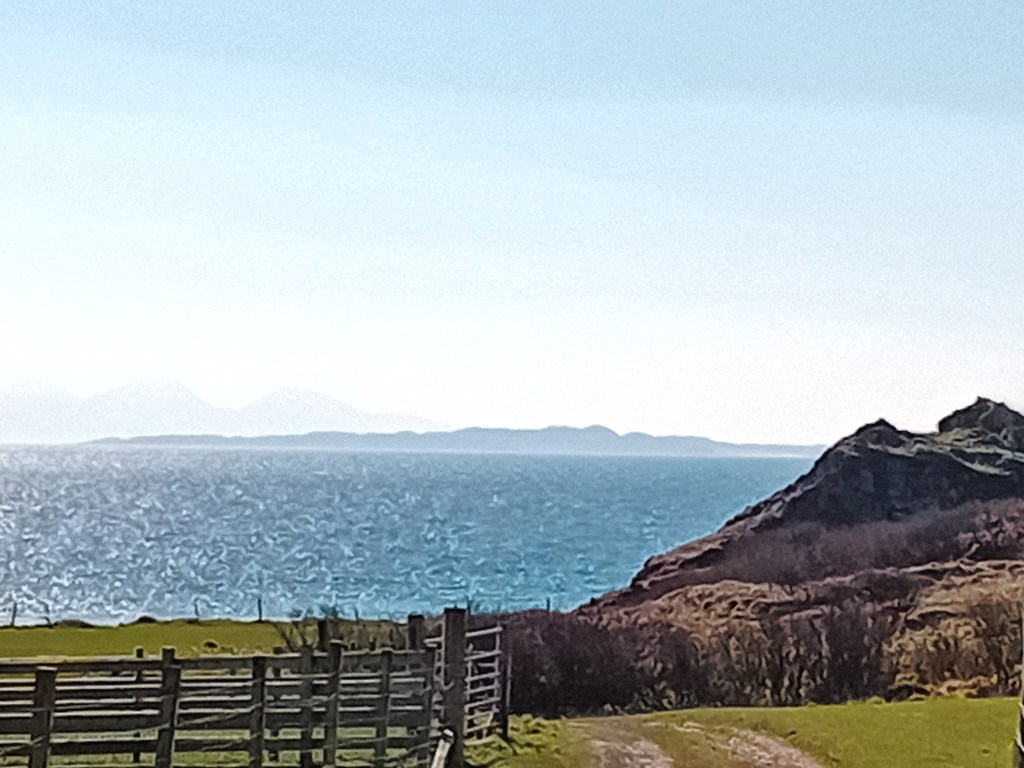
    Leaving them to drop my stuff in the boathouse, I drive to Ardanalish Woolen mill, a place I have fantasized about since my first trip 2 months ago. A wide, empty beach looking out to Jura leaves me sitting in the car for a few minutes, soft gazing.There is the sound of mechanical looms at work, like the industrial revolution must have sounded when multiplied exponentially. I head straight for the shop. I explain that I am the newest recruit on Erraid; the woman knows it well and nods as she smiles. Her speech is soft and clear. She is has island calm and is easy to warm to. I tell her I know what I’m here for. The jumpers are uniformly folded and stacked. There are 12 in total. She says, ‘ try as many as you can because they are all slightly different shapes.’ I tell her I can’t be trusted with light colours, so the cream ones are left. I settle on a charcoal one; the neck roll not too tight, the arms plenty long enough for my gibbonish limbs and the torso extending well below the belt line. It is slightly scratchy and still smells strongly of sheep. They leave some lanolin in which means they are partially waterproof. Wearing it feels like I’m being hugged. The money I am paying (comfortably more than I have ever paid for any item of clothing) doesn’t elicit guilt. These people are crafters and care deeply about what they do. They dye their wool with plants found on the island. All the wool is from Mull sheep, the weavers are trained on site and are young people with a love of the process. I will probably be a frequent visitor as this is a popular stop-off for Erraid guests. I guess I could propose a commission deal but really, I’m not that kind of person and they don’t seem like it either but I do think a reciprocal situation will happen quite naturally… somehow.

    Taking it for a test run on Ardanalish beach among the granite rocks with hairy fruticose lichen growing on them, I sit on a bare rock and watch the small terrier waves being pestered by the wind. 

    I feel a gentle glow inside. The breeze is brisk but I am warm at the core. A strange sense of safety lingers up the track to the car.

    Back at Finneport I hone in on another target, Creel seafood cart, to pop my scallop cherry. I can’t believe it’s taken 52 years. 4 huge battered balls nestle atop an ample portion of skin-on, thin-cut chips. I’m a huge fan of batter but was left feeling I would have liked to nibble it all off, take them home and pan fry them with some lemon and whatever else you put on scallops so I can taste them in all their undress.

    Parking up back at Knockvologan I heft my rucksack with the milk, eggs and butter and start back, passing fat, fluffy white lambs and their oblivious mothers, past industrious oyster catchers, past Judy’s cottage and back to number 7.