Take junction 13 north up the M5. Let it merge into the M6 and carry on north, past the tantalising
Tebay services and other, more geographical marvels of England’s north. Travel through Glasgow—
perhaps having stopped overnight in Carlisle—and continue to the beginning of the Highlands, bending
left around Loch Lomond first. Squiggle through gently inclined valleys until Oban appears, quite
suddenly. Rest a while as the CalMac ferry reduces its schedule to a paper exercise, then enjoy the often
choppy sail to Craignure, Mull.
Exit left and prepare for over an hour of single-track road with passing places, where blithe, wide
camper vans dally and locals rally. No, they haven’t forgotten to turn off their indicators—they want to
get by! Skirting Loch Scridain with its views of the sheer western peninsula, try not to crash. Turn left at
Fionnphort, left again at Fidden, wiggle, wiggle, wiggle. Park at Knockvologan, put wellies on, carry
what you can, and hike down—over the beach if it’s not submerged (in which case, take off your wellies
and wade or go back to Fionnphort for the night if you start getting pulled out to sea). If you’ve made it
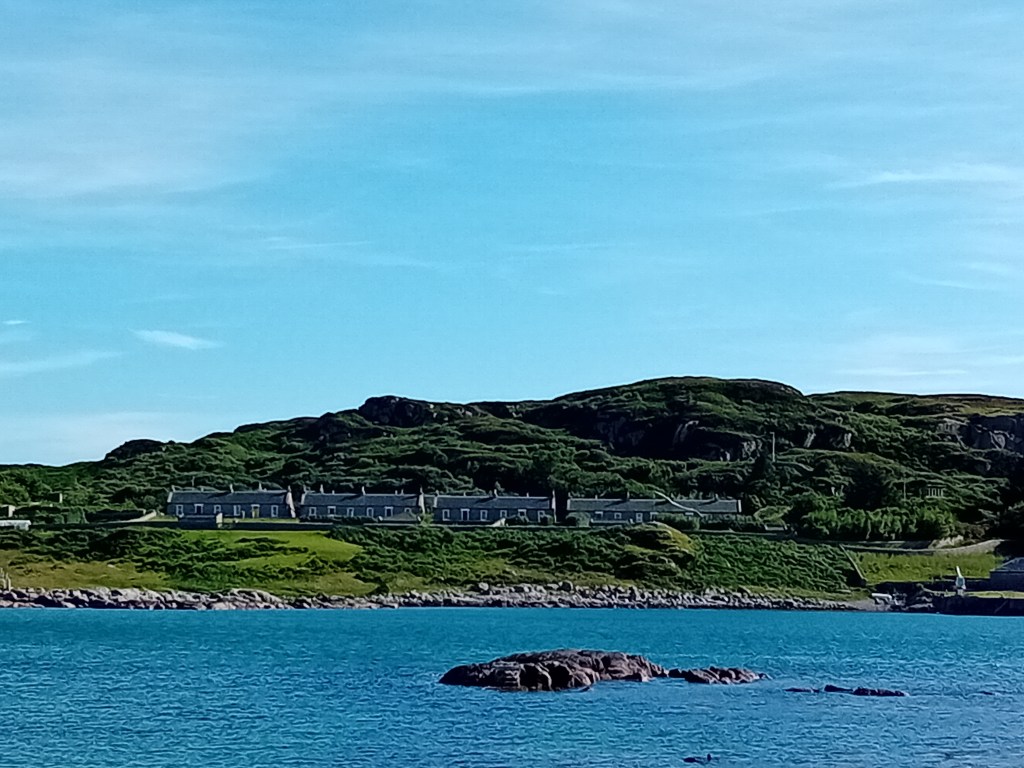
over, you are now on Erraid. Follow the coast northwest, past Judy’s cottage, up the tractor track,
through the gate below the old schoolhouse, and find someone to say hi to.
After welcomes and refreshments, there is often talk about the journey—whether the newcomer found
the island with ease or difficulty. Last week, however, a different conversation began in hushed tones,
sparked by a daughter who had come with her mother:
‘We are in Findhorn, right?’\ ‘This is Erraid. Findhorn is three hours north of here.’\ ‘I didn’t
think the Findhorn Foundation was on an island. What shall we do?’\ ‘You’re welcome to
stay.’
They ended up having a lovely week.
It’s not as silly as it seems. Until very recently, the island of Erraid community was run by the Findhorn
Foundation. Findhorn is famous in New Age circles for transforming a barren piece of land in the 1950s
into a beautiful garden and retreat centre—with all the fabled giant cabbages you could eat. COVID had
a major impact on operations, and the foundation has now shrunk to a fraction of its former size. As a
result, it has rationalised its activities, passing the running of Erraid back to the island’s owners, the Van
De Sluis family.
An intentional community is one where a group comes together for a common aim. Here, it is to be as
self-sustaining as possible and to be guardians of the historically important lighthouse keepers
cottages. It’s difficult to be completely self-sustaining and, as one member recently pointed out, not
even desirable—that would negate cooperation with the neighbours, a vital part of life in remote
communities like the Ross of Mull. We also host paying guests who come to experience community life
—usually for a week—or to retreat and take time for themselves: walking, reading, finishing a writing
project, that sort of thing.
There are six of us who have committed to a long-term stay here, usually between one and three years.
Apart from Magnus, none of us have been here more than two months. Beyond the geographical
remoteness from towns, shops, and services, building a workable, sociable, and fun group is the
biggest task—the challenge we accept and work on every day. It quickly becomes clear that it requires
more than simply making friends with five other people. We need to build systems that allow us to
navigate any eventuality—from minor disagreements to deploying resources during a critical medical
incident. We’ve all had some experience of communal living and decision-making. The selection process
was rigorous, with probing interview questions, but we all arrive with our own habits, tics, tendencies,
and foibles. Some of us tend towards overworking, some to introspection, others to extroversion. We need different amounts of personal space and time alone. Some get ill more often; some have
diagnoses that require consideration. All of this needs ongoing attention and care.
A lightness of touch is essential. In all the personal communication, the maintenance, cooking, ordering
of supplies, caring for animals, and tending gardens, remembering that, as Alan Watts put it, “we are at
play” is key to thriving here. The weather plays—battering rain into full sun in the time it takes to boil an
egg. The sea plays—changing from clear blue to peat-brown after rainfall, varying its tides and currents
so you never approach the far jetty quite the same way. The land plays—step off the street and the
ground becomes ever-changing, from ageless granite to welly-eating bog to fine white beach sand.
Yielding to all this is essential: a willingness to say “yes” to the games offered here. To learn the rules. To
accept that sometimes you will be “out” and must contend with sea spray, cancelled ferries, a boot full
of brackish sludge, or a waterproof jacket that worked perfectly well in the Cotswolds—but not here.
To remember to be at play is to surrender. Not everything will get done today—not in the way you
thought, anyway. The unexpected lurks around corners to test whether you’re still playing the game: an
overflow pipe suddenly spewing water, an outboard motor that won’t start, the mobile cinema turning
up in Bunessan. Can you welcome the novel and disruptive as the jokers in the pack.


 Erraid life
Leave a reply to marilync1416 Cancel reply