The minibus went into the local mechanic to get a few seats removed, along with all the previous owner’s logos. A kind volunteer drove me to the garage just outside Bunessan. On the way back, she shared her concern about a small toy she’d bought from the charity shop that had somehow fallen into the cavity around the steering column and disappeared from sight. She was worried it might be damaging something internally—or worse, find its way into the engine. She asked if I could mention it to Adam, the rather taciturn but wry mechanic.
I’d already had a message saying the minibus was ready and parked in the car park. However, on arrival, it was nowhere to be seen, so we had to ask Adam where it was. Before I got out, the volunteer reminded me of her predicament. It wasn’t a conversation I was particularly looking forward to, if I’m honest. I made my reservations known… but said I’d do it.
Having established that the minibus was in the car park—“that is the normal place I leave cars,” which turned out to be a small piece of wasteland rather than the official car park—I remembered.
“Um, the person who gave me a lift has a problem with their car and wondered if you’d have a quick look.”
“What’s the matter?”
“There’s a chicken stuck in the steering column.”
Adam stopped walking and turned his head about 20 degrees, his expression unchanged.
“A real chicken?”
“Not a real chicken—just a small toy one. The kind you get at Easter in an egg.”
“Is it a hard chicken or a soft chicken?”
“Well, the body is soft—fluffy, probably some sort of nylon—but the legs and feet are plastic.”
“Does it have a beak?”
“Of course it has a beak, but I’m pretty sure it’s cardboard.”
“Tell her not to worry. If it was a hard chicken, there could be a problem. But that sounds fine.”
“Thanks, I’ll let her know.”
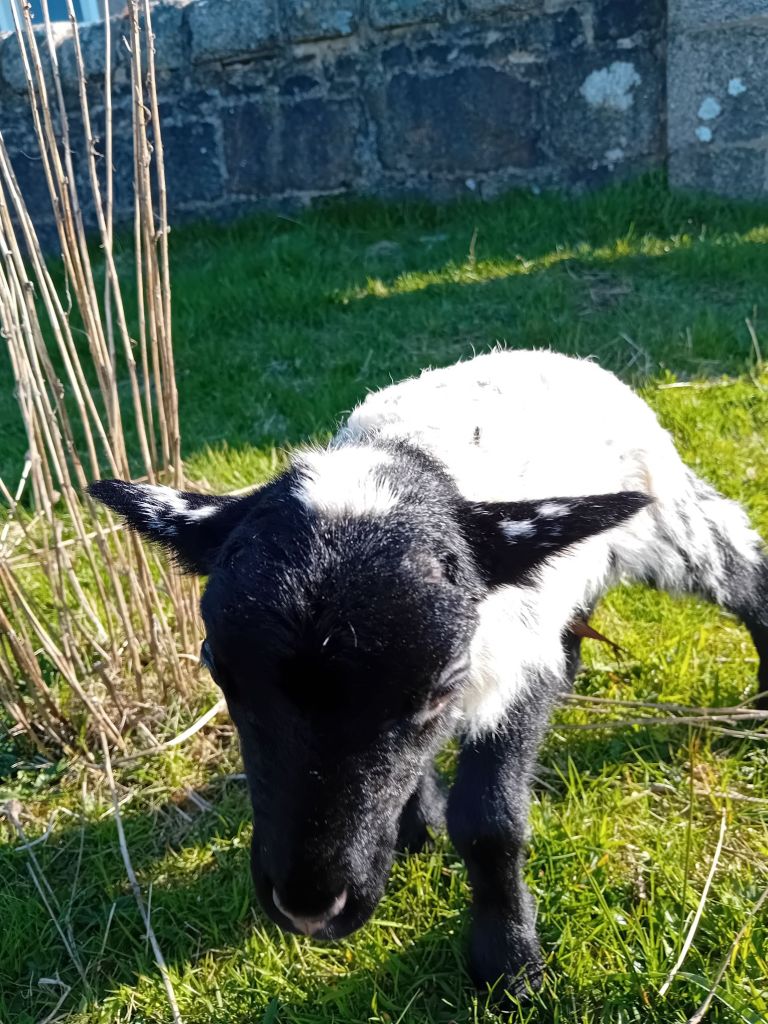
A couple of days later, I’m walking off Erraid with two guests who’ve been with us for a week. Lambing season is in full swing, and Crofter John’s flock are some of the last. The fields are full of anxious mothers with heavy udders and wobbly infants, many with long umbilical cords drying beneath their tummies. They’re wary of us—calls go up and lambs skitter back to safety.
From a thicket to the left, a ewe jumps deftly over a drainage ditch. I stop to let her pass. Then there’s a flash of white and a small thud as her lamb fails to clear the same ditch and ends up at the bottom. It’s narrow and steep—there’s no chance the lamb is getting out by itself.
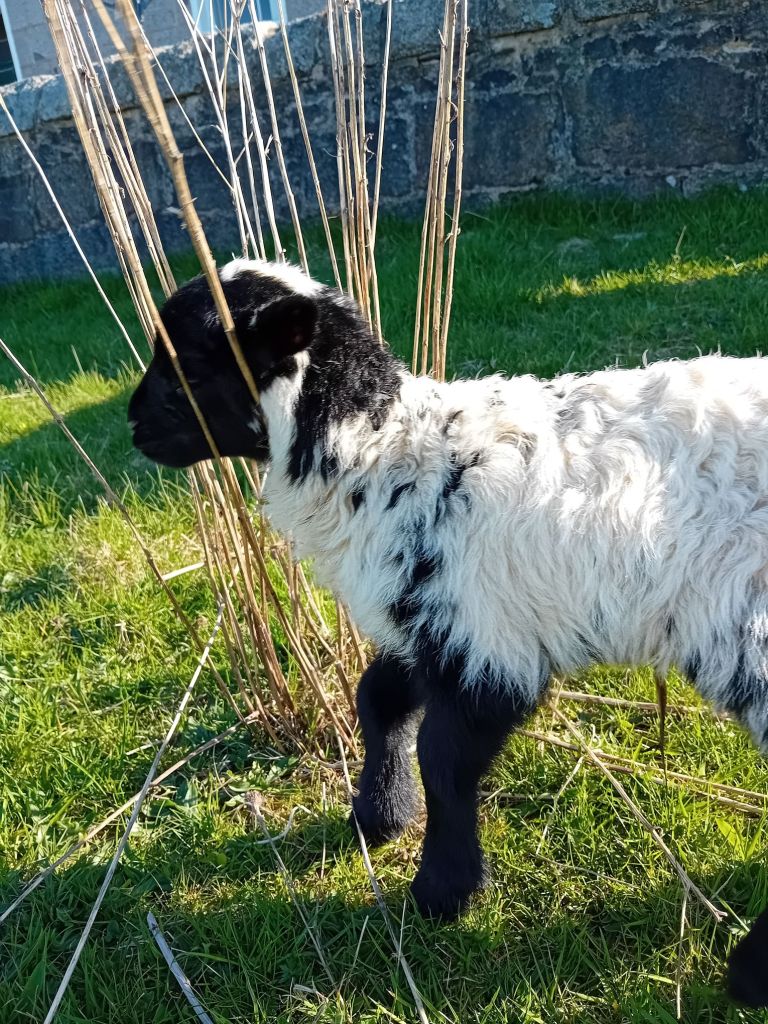
I put down the luggage I’m carrying and straddle the ditch. The lamb is wedged in, and I have to pull it out by the neck, but out it comes. I set it down. It shakes itself, then runs straight to me, pressing against my leg. Mum is calling from about ten metres away, but junior isn’t responding. I walk off, but the lamb runs to catch up.
I resist the urge to pick it up—I don’t want to get too much of my scent on it and confuse its mum. I gently nudge it away with my boot, but it’s like there’s an elastic band pulling it back to me, completely involuntarily.
Aware that the guests I’m with have a coach to catch, I have a bit of a dilemma. This lamb is convinced I’m its mother, despite her very vocal objections. In the end, I crouch down and wait. I desperately want to stroke its soft, new white wool, but I keep my arms folded.
It doesn’t move or show any sign that anything’s amiss. Mum is getting more urgent, edging closer bit by bit. After a couple of minutes, there’s the tiniest bleat—one of the highest-pitched I’ve ever heard. Nothing happens at first, but I feel like this might work.
The second bleat is just as high but stronger—and this time it gets an immediate response. The lamb starts to shuffle around, as if trying not to see but to smell its mother. She comes forward another metre and calls again. At that, the lamb edges cautiously away from my side, then suddenly runs as fast as its oversized hooves will allow back to her.
After a brief, thorough sniffing inspection, the lamb is allowed a very welcome drink.


Leave a Reply